



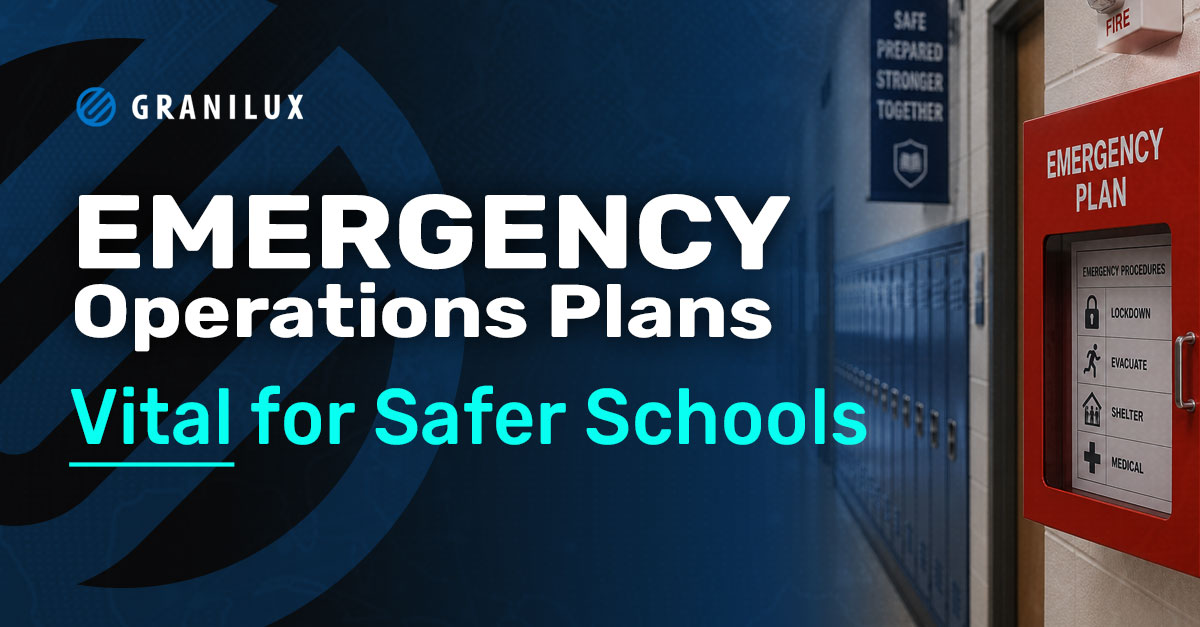
Safe schools are a must. Despite best efforts to prevent or avoid school emergencies, they are, unfortunately, bound to happen.
For this reason, it’s important to implement safe school strategies before emergencies occur. School safety programs built on preparation, collaboration, and continuous improvement are the most effective.
At the heart of these programs are Emergency Operations Plans (EOP).
An EOP is a living document that defines the procedures, responsibilities, and coordinated response strategies schools should have in place to protect students, staff, and visitors during a crisis.
As defined by the Code of Virginia (§ 22.1-279.8.A), an EOP means “the essential procedures, operations, and assignments required to prevent, manage, and respond to a critical event or emergency, including natural disasters involving fire, flood, tornadoes, or other severe weather; loss or disruption of power, water, communications or shelter; bus or other accidents; medical emergencies, including cardiac arrest and other life-threatening medical emergencies; student or staff member deaths; explosions; bomb threats; gun, knife or other weapons threats…and other incidents posing a serious threat of harm to students, personnel, or facilities.”
As you can see, there’s a lot to cover in an EOP. Creating one, therefore, requires team effort. Proper EOPs are developed through collaboration among several stakeholders, including: school administrators, principals, teachers, resource officers, firefighters, emergency medical responders, law enforcement, counselors, social workers, parents, and the surrounding community. Each of these brings unique expertise and requirements that prepare and equip schools through a myriad of scenarios while also ensuring actionable procedures are aligned with emergency responses and personnel.
Developing the EOP is just the beginning.
From there, schools regularly conduct training scenarios such as evacuations, lockdowns, and shelter-in-place drills to establish familiarity and continuity with emergency procedures. Exercises like these help identify opportunities for tactical improvements, while review of drill data, incident reports, and facility assessments lend insights into how emergency response strategies can be strengthened.
At Granilux, we recognize that effective EOPs follow a structured, repeatable process. Our framework helps schools create these plans through six essential steps:
- Form an Inclusive School Safety Audit Committee. This ensures every stakeholder has input into the planning process.
- Understand the Current Situation. This is done through comprehensive risk assessments, safety inspections, and school climate surveys.
- Determine Goals and Objectives. Run a gap analysis on all vulnerabilities and priorities to be sure they all drive toward the common aim: safety.
- Develop the Plan. Draft and refine all possible procedures and courses of action for potential emergencies in clear, easy-to-share documentation.
- Prepare, Review, and Approve. Get blessings from and share with all necessary stakeholders.
- Implement and Maintain. This is a living plan that works best through ongoing training, drills, exercises, evaluations, and continuous updates.
School safety EOPs are not one-off projects.
New threats emerge, facilities change, and tools and techniques for responding to emergencies evolve. Regular assessments, stakeholder input, and plan revisions ensure Emergency Operations Plans remain relevant and applicable.
Need Help Developing Your EOP?
Give us a call today to discuss how we can help your school develop its Emergency Operations Plan.